
What if I told you, some of what you know about brand and performance media may not be right?
Brand or performance marketing? It's not that clear cut; insights from real-world analytics.
3/2/20264 min read
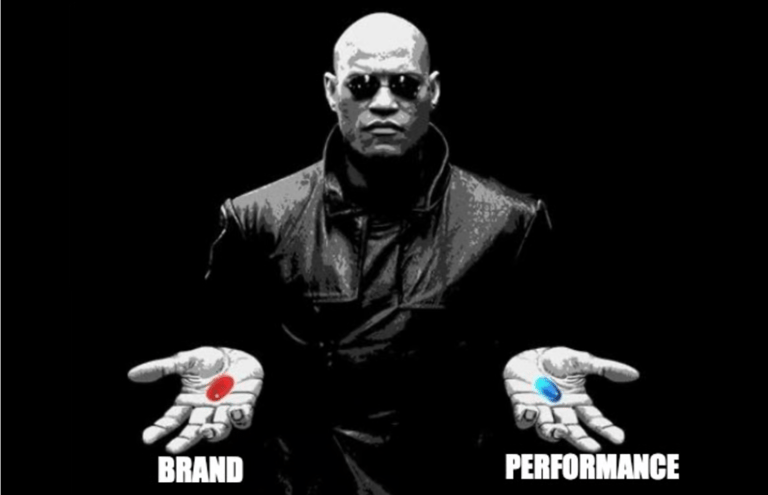
Marketers have long debated where the line lies between “brand” and “performance” marketing. But what if that line is not really that crucial—or at least not in the way most arguments frame it?
Lately, there’s been a surge of discussion on LinkedIn and elsewhere about brand’s relationship to performance media. It’s a fascinating topic, and while I’m not a fan of the rigid “brand versus performance” distinction, it’s worth unpacking a few realities drawn from real-world data and experience.
Across hundreds of campaigns and brand studies, one pattern became impossible to ignore: effectiveness and brand building are not separate disciplines—they should be part of the same system. And some of the most common assumptions in this debate simply don’t hold up when tested against evidence.
Over the past several decades, I’ve been fortunate to measure both brand and performance outcomes at the same time—sales, new customers, and long-term brand equity—for major companies like AT&T, General Motors, Visa, Disney, Kraft, Coca-Cola, and Burger King, among many other smaller companies spanning numerous verticals and stages.
From that work, consistent—and sometimes counterintuitive—patterns have emerged. These findings don’t come from academic thinking or meta-analyses, but from hands-on measurement, vetted by sophisticated internal analytics teams and C-suite execs at some of the world’s largest advertisers.
Here’s what the data actually shows:
Most brand marketing isn’t as impactful “long term” as people think
Culturally defining brand campaigns are rare. When they happen, their impact is unmistakable and enduring—but brand campaigns more often than not fall short of that high bar. Their effects fade quickly, which makes the “brand versus performance” debate far less clean-cut. In fact, typically much of a campaign’s influence can be measured within the same time windows used for common media and sales performance analysis.Relative effectiveness matters more than the label
We don’t talk enough about relative strength. A high-performing “performance” campaign can outshine a weak brand effort—not just in conversions, but in longer-term brand outcomes. Every consumer interaction shapes perception. Bringing new customers into the fold is, in many ways, brand building. A stellar performance ad can deepen brand equity more than a forgettable brand campaign ever could.Media's Impact on Brand KPIs often fade fast
Metrics like awareness and consideration typically spike during flight, then return to an ambient level within weeks or months. If you’ve ever watched that rapid lift-and-decline pattern, you know the story. It also means that tools like Marketing Mix Models (MMMs) do capture much of brand marketing’s measurable influence (again, except in extreme cases)—despite claims to the contrary. Those pretty theoretical “staircase” graphs showing endless cumulative growth? Rarely true in practice (new products are a noticeable exception). If they were, any brand with always-on campaigns would grow equity forever—which normally doesn’t happen.The right balance shifts with the brand’s life stage
In a brand’s early days, awareness and consideration are critical. As the brand matures, performance drivers may matter more. Adding to this is that any ad can have a mix of either brand or performance, which makes the line even more murky. The optimal mix depends on numerous factors: category dynamics, competition, business maturity, and macro conditions. The best marketers continuously measure and adjust, not cling to fixed formulas or generic rules of thumb like 60/40 splits.All media can build your brand (but so can many other factors)
Branding doesn’t live solely in advertising. Customer experience, product interactions, and even promotions can strengthen brand equity—provided they don’t create discount dependency. Under the right conditions, “performance” media can serve brand ends. Acquiring a new customer is an opportunity to build the relationship—if what follows upholds the brand promise.Branding can act as an amplification of every driver
We tend to think of the impact of "brand" as a separate thing. That is certainly one way to think about it, and under certain situations maybe that is ideal (initial stages of the life cycle, for instance). But longer term brand can be thought of as an amplification of everything you do. That response you get from a price increase? Lift on your promotions? Even advertising effectiveness in general? At some point it is hard to divorce "brand" from the product itself and like space-time, it's everywhere.
Viewed in aggregate, there’s no “sleeper effect” in advertising
When advertising works, you see it working—quickly. Even long-term strategies depend on immediate recognition or response. If there’s no (or weak) measurable impact in the short run, there won’t be one (or strong) later. Long-term effects exist, but they build on early success, not out of nowhere.We need to define “brand” precisely - and properly measurement depends on it
“Brand” can mean awareness, trust, equity, distinctiveness, emotional connection—the list goes on. Without clarity on which definition we’re using, discussions about brand versus performance risk talking past each other. This deserves deeper exploration, which I’ll cover in a future post.
The Takeaway:
Experience and actual analytics shows that brand and performance strategies can work together on a single continuum, although the distinction between them may not be as critical as the debate suggests.
The marketers who win won’t be the ones stuck in the binary debate, but those who master the full spectrum and build unified measurement systems to manage and optimize across it.
Moreover, this approach will help them avoid some of the common myths around this and allow optimization of their own business and current situation.
Contact
Reach out for tailored support
Email:
Phone:
mlogics.ai@gmail.com
201.835.0555
© 2026 Mlogics (All Rights Reserved)